AUVA
Isolateurs d'enceintes AUVA 100
description
£478.56 – £1,240.00TVA incl.
Expédié sous 2 jours ouvrés
Détails du produit
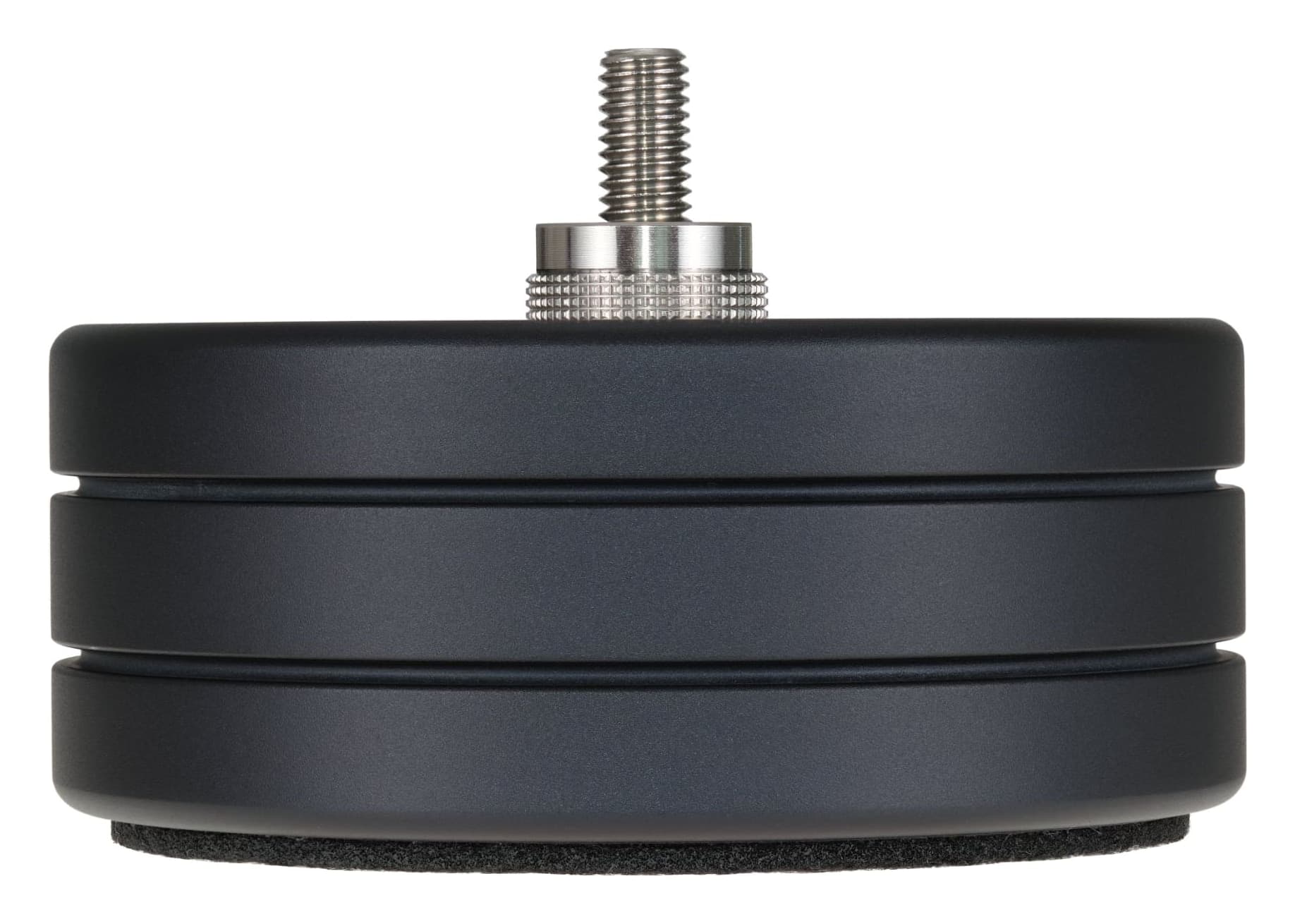
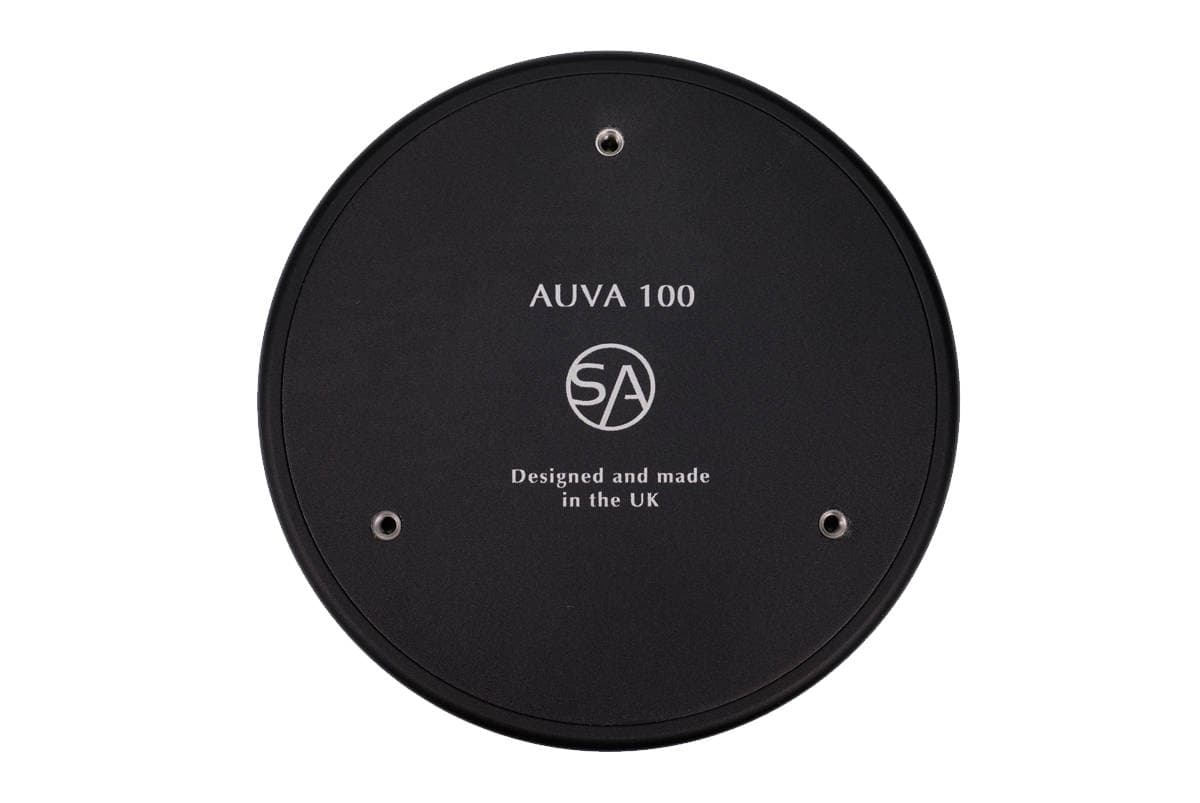
The Stack Audio AUVA 100 is a speaker isolator that enhances the clarity and timing of musical notes by securely holding your loudspeakers and dissipating vibrations through its five precisely calibrated AUVA cells. The isolator can be used on both hard floors and carpets, and attaches to speakers via the included threaded adapters. The AUVA 100 is compatible with both stand-mount and floor-standing speakers and improves your listening experience by eliminating unwanted vibrations, revealing a more natural timbre and texture in your music.
- 4 x AUVA 100
- 4 x M8 thumb nuts
- 4 x Thumb nuts (thread size specific)
- 4 x Fixing adapters (thread size specific)
- 4 x Felt disks (pre-installed)
- Choice between 15mm or 25mm spikes to accommodate for carpet thickness.
UK orders ship from our UK warehouse, with UK VAT included.
All European orders ship from our warehouse in the Netherlands, with your country’s VAT included at checkout, so there are no import duties to pay on delivery.
All US orders ship domestically from our US fulfilment centre. A 10% price adjustment covers pre-paid import costs, so the price you see is the price you pay, with no customs delays.
All Australian orders ship from our Australian fulfilment centre. A single location-based price adjustment covers GST, import handling and processing upfront, so the price you see at checkout is the final price you pay.
Orders to the rest of the world ship from our UK warehouse and are shown without VAT. Local import duties and taxes may be charged on delivery.
Please consult installation PDF below for important information on the AUVA Loudspeaker Isolators.
Useful duty and shipping information can be found here.
Presse & critiques
“Thanks to greater accuracy, the music gains coherence and timing, increasing dynamic range and providing more freshness and vibrancy. Singers and instruments have greater presence and body. Furthermore, the 3D representation is more immersive. The increased spatiality is accompanied by greater openness and airiness.
Thus, the AUVA 70 offers a significant performance boost and, considering the sonic improvement, is truly excellent value. Highly recommended!”
Read more by clicking here.
"The Auva 70 injected a particular kind of tonal intensity, fruitiness, elasticity, and tactile presence that greatly enriched a large portion of my daily music diet."
"Before the Auva 70 landed in my listening room, I was convinced a top-tier anti-vibration accessory needed a bit of lateral play. It proved me spectacularly wrong. Every bit as potent as the other isolators in my arsenal, it does all this without a single moving part—which, let me stress, is proper wickedness in its own right. Mechanically robust and visually understated, it whispers quiet-luxury competence without ever needing to brag. Elegant design, upper-echelon performance, and a very competitve price leave nothing to gripe about—not even the Auva 70’s tasteful, self-assured style. Tip of the hat to Team Stack Audio for conjuring this nifty little thing and charging it with such might and confidence."
Read more: https://hifiknights.com/reviews/accessories/stack-audio-auva-70/
"The improvement gained by upgrading from stock spikes to the AUVA 50s is matched by the enhancement experienced when moving up from the 50s to the 70s."
Following iiWi's review of the AUVA 50 Loudspeaker Isolators, we sent him a set of AUVA 70s to try in his personal setup. After comparing the differences, he decided to post a follow-up video.
"The AUVAs provide a sweeter, lusher, and calmer sound than standard spikes, with a considerably more liquid and organic delivery. The music flows effortlessly and 3D imaging unfolds freely in a deep, wide, and inviting soundstage."
Vibrations exist in our systems, and those vibrations can distort the music we love. British manufacturer Stack Audio aims to bring music to life by focusing on vibration dissipation and isolation, leaving only the pure, undistorted music we want to hear. Their mission is to remove masking vibrations so that the audio equipment can reveal more detail, texture, and transparency.
Stack Audio has noticed that the performance and price of hi-fi equipment and accessories are often not directly related—minor improvements typically come with a disproportionate price tag. Since its incorporation in 2013, all Stack Audio products have been fully designed and assembled in-house in the UK. The company strives to develop products that outperform their price bracket yet are still constructed to the highest standards.
The company offers two kinds of Isolators: the AUVA EQ System Isolator (audio component footers) and the AUVA Speaker Isolator (speaker footers). For this review, I’ll focus on the Speaker Isolators.
There are three Speaker Isolator versions to choose from – AUVA 50, 70, and 100. They attach via supplied threaded bolts into the existing mounting holes on the underside of loudspeakers or stand mounts. Different thread sizes are available to suit, and the AUVAs are provided either with carpet spikes or protective felt pads for use on solid floors.
All AUVA variants support speakers up to 275 Kg and can be used with both stand-mount and floor-standing loudspeakers. However, the vibration-absorbing performance depends on the version and size. The AUVA 50 contains 2 internal cells for effective vibration absorption. The AUVA 70 has 3 cells, and the 100 has 5. The AUVA 70 and 100 additionally include a central particle-filled chamber for extra absorption capability.
Vibrations can distort the sound we hear, emphasizing some frequencies over others and masking detail and texture. The AUVA Isolators are designed to hold loudspeakers rigidly while absorbing and dissipating cabinet vibrations before passing them down to the floor. Simultaneously, the products aim to prevent room vibrations from feeding back up into the speakers.
Stack Audio explains that compliant isolators (such as rubber, foam, or springs) can reduce vibration but move and compress, leaving your speakers held less rigid. I can attest to this as I have yet to find a compliant footer that provides clarity and control to my satisfaction.
As Stack Audio acknowledges, holding loudspeakers precisely is critical to hearing spatial detail and the clarity and timing of musical notes. These are essential elements that make focused listening a pleasure and hold your attention. This is why it is common to use spikes under loudspeakers, which couple them to the floor. And, sure enough, this statement is again fully on par with my personal experiences.
However, as the company found, there is a problem with spikes alone as they allow vibration to pass right through in both directions – to and from the loudspeakers. The AUVAs work differently: enclosed within the AUVA’s precision machined aluminum cases are cells containing a mixture of particles. Vibrations excite the particles, creating movement and collisions that dissipate the energy virtually instantaneously. Think of it like throwing a ball into soft sand – the sand absorbs the energy from the ball, preventing it from bouncing. According to the maker, this patent-pending technology enables the AUVAs to remove masking vibrations over a wide frequency range, revealing more of the clarity in the musical recording. In essence, by working like a natural extension to the speaker, AUVA loudspeaker isolators are designed to provide the best qualities of both spikes and isolators – without the drawbacks.
The products come complete with detailed instructions, which cover not just the installation but also speaker setup in general and contain a lot of good advice.
Highly recommended for this job: Wurth Viking Arm. This tool makes swapping footers a breeze, carefully and precisely lifting even very heavy speakers with ease.
My room has a laminate floor (vinyl planking), and I usually use Spikes under all racks and speakers. The AUVAs are fitted with solid floor circular felt pads and can optionally be ordered to include Carpet spikes. As their name implies, these are intended to pierce carpets and provide solid coupling to the hard floor underneath. Given my laminate floor, the AUVAs should be used with their felt pads.
I did entertain the idea of also trying the supplied spikes, but I do not have 24 identical spike discs to facilitate this. A wood plank could be used to protect the floor, but that would induce a different sound than the stainless steel disks I usually use, and the speakers would sit too high, further skewing the comparisons. Finally, I contemplated using the spikes directly on the floor, but obtaining 72 new holes in a single session seemed like a bit much, so I just used the AUVAs with their felt pads, as intended.
Listening
In my experience, it is always best to securely tighten couplers. Despite their unique working principle, AUVAs are no exception. The AUVA’s threaded inserts should be screwed tightly into the isolator disks, which is easy using the supplied wrench and further locked using one of the two round thumb nuts. The other end of the threaded inserts attach to the bottom of the loudspeaker or stand via the threaded holes of the original feet. After leveling the speaker, the inserts should be fixed using the second round thumb nut. This can only be done by hand, and the thin profile provides little grip. I think it would have been better if hex nuts had been fitted, but these can be added later. In any case, it is crucial to tighten these nuts securely for the best incisiveness, transient attack, and sense of pacing.Stack Audio recommends the threaded inserts are screwed as deeply into the speaker bases as they can. For this review, however, I opted to insert them such that the speaker’s height remains unchanged to create equal circumstances.
The pictures were all taken before the final listening tests (and reading of the manual), which is why they show both nuts tightened against the speaker base. While that also works well, I recommend following the manual’s guidelines and using one nut on each end.
AUVA 50
The AUVA 50s provide a markedly sweeter sound than the Magico’s standard spikes. The bass is rounder, fuller, and seems deeper, although initially less punchy and direct. The presentation seems warmer, but paradoxically, it really is not. This is where the AUVAs prove unique, as there is no blur or thickness and no loss of resolution. The sound is precise yet smooth and delicate.The initial impression of enhanced warmth comes from reduced dryness and edginess, and the overall calmer feel. When one is accustomed to the controlled and direct sound of spikes, the pacing with the AUVAs may initially appear slower until you adjust to this. After a track of two, it starts to feel more natural and just more relaxed. Meanwhile, the midrange stays beautifully open and focused, and the leading edges remain clean, although transient behavior is friendlier than before, which can subjectively reduce the excitement with some music. What you get, in turn, is greatly enhanced fluidity and flow, a music delivery that feels considerably more organic.
When switching from the AUVA 50 to AUVA 70, all the smaller model’s benefits are further increased in their effect. Most notably, the bass is more prodigious, fuller, and rounder. It loses a bit of incisiveness but gains richness.
Further, the sound stage is now fully detached from the speakers, hanging freely in the air, while possessing a wider and deeper space. Within the royal stage, vocals or individual instruments float more freely, and acoustic arrangements feel even more organic and natural than with the smaller AUVAs. Interestingly, the overall delivery is calmer and lusher than with the AUVA 50, but still, all the resolution is retained.
AUVA 100
Whoa… If you want big, heavy bass, look no further! Considerably more so than the AUVA 70s, the AUVA 100s provide an absolutely massive bottom fullness, extending into the lower midrange, along with lots of meat on the bone.The soundstage bubble is comparable to that of the AUVA 70 and still entirely free from the speakers, but the distinction between individual players and sounds in it now appears a little less vivid. Maybe this is a psychoacoustic effect or an interaction with these speakers, but contrary to the AUVA 50 and 70, the AUVA 100 seems to take away a little precision and clarity. One reason for this may be that even when using spikes, my system already has plenty of bass, meaning the AUVA 100s make the sound a little too bass-heavy.
Nevertheless, there’s no denying their effect. I imagine smaller monitor loudspeakers could benefit massively, and the AUVA 100s could also be a hugely effective solution for an overly lean-sounding or clinical system.
With the standard Magico spikes back in position, it’s no surprise that the bass is tighter and more incisive, as that is what spikes are typically good at. But although there is technically nothing wrong with the sound, it now feels emotionally very different. The strange thing is that although the soundstage has not collapsed, it has a hugely restrained feel. All the individual elements that make up the music appear more frozen in place, and the entire orchestration is fixed rigidly to the speakers rather than individually floating freely around them. Even though I am a big fan of crisp tightness and articulate bass, I must admit that taking these aspects to the max does come with sacrifices in other fields.
This is indeed a valid discussion point among audiophiles. The tightness of spikes can favor some music, notably electronic music such as R&B, while the AUVA’s lusher free-breathing presentation caters much more to vocals and music with real acoustic instruments. As is often the case, there is no right or wrong, but there will be an ideal match for a given circumstance influenced by personal preference. In any case, the AUVAs present a unique set of skills at a competitive price point and are well worth auditioning.
The AUVAs provide a sweeter, lusher, and calmer sound than standard spikes, with a considerably more liquid and organic delivery. The music flows effortlessly and 3D imaging unfolds freely in a deep, wide, and inviting soundstage. Although the overall feel is smooth and relaxed, the pacing remains upbeat, and dynamics are retained. Notably, although the transient behavior is friendlier and less sharp than with spikes, unlike soft-coupling spike alternatives, the AUVAs induce absolutely no blur and retain superb detail resolution. There is no shortage of alternative footers, but of all the variants I heard, whether hard-, compliant-, or in-between solutions, none possess the AUVAs’ unique combination of skills.
Read more here: https://www.hifi-advice.com/blog/review/accessories-reviews/racks-stands-feet-reviews/stack-audio-auva-speaker-isolators/2/
Hi-Fi+ published a review of the AUVA 100s by Alan Sircom in their September edition. Click the link below to read the full write up.
“The AUVA 100s truly are the best footers I have ever heard in my 35 years of high-end audio.”
Watch more below.
"The differences are significant, the bass tightens up & has more control. The improvements spread throughout the whole tonality of the speaker."
"The clear winner for me is the AUVA Isolators. Why? Very simple, all of a sudden the speakers & playback changed. Everything just sounded natural. More focused & detailed, but at the same time, unleashed."
"The AUVA 100s truly are the best footers I have ever heard in my 35 years of high-end audio."
"If you're sensitive to time smearing, the AUVAs are your best friend."
"In essence, the AUVA 100 does everything the Townshend Seismic Isolation Podium does for the sound but often does it better." Hi-Fi+ published a review of the AUVA 100s by Alan Sircom in their September edition. " There is an ancient philosophical paradox known as ‘sorites’ or ‘the paradox of the heap’. Imagine a heap of sand, now keep removing grains of sand. At one point, it ceases to become a ‘heap’. Logically taking away that last grain of sand didn’t solely cause the cessation of ‘heapiness’; adding a few grains of sand once more will not restore it to being a heap. The sorites paradox hangs on the vagueness of its predicates. The heap paradox doesn’t count in audio because we’re an obsessive lot. To us, a heap is precisely eleventy million grains of sand, no more, no less. And it is against that obsessiveness that companies like Stack Audio set out their store. The Stack Audio AUVA are made to replace the spikes of loudspeakers, with the AUVA 50 for the more svelte speaker, the AUVA 70 designed for most models and the AUVA 100 a perfect choice for the huskier transducer up to 275kg. I used the latter with my pair of Wilson Audio Duette II. Into the AUVA If you upend a pair of loudspeakers, you’ll find one of the myriad combinations of spike diameter, thread, weight loadings and even number. Theo Stack recognised that although the same basic properties apply throughout, making three sizes of AUVA (and a wealth of different thread sizes and diameters) means almost every floorstander, stand-mount stand and even spiked bookshelf speakers can be accommodated. Why replace the spikes? First, think about what spikes try to do. There is a lot of stray vibration energy in a loudspeaker that is best removed. A spike is a hard coupler, effectively ramming the points of several into the floor, and letting the sheer mass of the house absorb any vibration. It’s proved popular, but it’s not that effective. There are other ways of absorbing or dissipating that vibration, perhaps the best-known of which are the Townshend platforms. The clue is in the name for Stack Audio; AUVA stands for ‘Audio Vibration Absorber). This is a very different way of removing that pesky vibration. The pod is a hollow vessel filled with loose particles of different materials, including tungsten powder. Vibrational energy transmitted through the spike thread hits this chamber of particles and is dispersed as heat energy. Think of this a little like the Styrofoam ‘peanuts’ that act as packing protection. Their job is to collide against one another in the box, thereby absorbing any external impact forces. The energy generated by cabinet resonance (in AUVA’s case) or the back of a courier’s van (in the Styrofoam setting) is dissipated as heat. What’s more, just as if you shake a box with a product protected by Styrofoam peanuts you can hear them gently rattling around, if you put your ear to the AUVA and give it a little shake, you can hear the loose particles rustling. This is deliberate. This isn’t the only thing going on inside the AUVA foot, but the rest is hidden behind pending patents and protected by ninja death squads. With one end of the AUVA neatly screwed into the vibration-making loudspeaker, the other side of the pod can be fitted with a pad or three tiny carpet-piercing spikes. These are not for vibration dissipation, but to root the speaker in place. Not my first rodeo I expected the AUVA 100 to do something, but this is not my first anti-vibration rodeo. I’ve long since gone away from spikes and adopted the Townshend Seismic Isolation Podium to keep vibration at bay. Also, although the choice of cabinet and stand materials in my trusty, now discontinued Wilson Duette II meant a lot of internal resonance and vibration was already dealt with in camera. So, while the AUVA 100 will do something, it will be an at best a nuanced difference given the setting. Or so I thought. The Stack Audio AUVA 100 profoundly impacted the loudspeaker’s performance. The music was more energised, more engaging and had considerably better separation and space around the instruments. But that was just the start. It didn’t matter what recording I played through the AUVA-equipped loudspeakers. In all cases, the same thing happened. The midrange sprung out at you, almost like a two-way loudspeaker suddenly became a three-way. Vocal clarity, articulation and projection improved considerably. This is extremely impressive when listening to someone already praised for their diction and projection (the tactical nuclear vocal cords of Joyce DiDonato, for example). Similarly, treble kinks – however mild – are ironed out, allowing a smoother race through the upper registers. You might expect the biggest change to the bottom end and would not be disappointed. The AUVA 100 feet tidy up the definition and precision of bass notes, even in a loudspeaker that traditionally gives good bass for its size. The improvement is more about ‘control’ than ‘depth’, but it makes the un-AUVAed loudspeaker’s bottom end sound almost ‘one-note’ by comparison. In essence, the AUVA 100 does everything the Townshend Seismic Isolation Podium does for the sound but often does it better. I found the deep bass notes of Trentemøller’s Chameleon, the subtle interplay of cello and mandolin in Yo Yo Ma’s Bach Trios and the fast, twitchy electro of Orbital to have greater snap and precision on the AUVA 100. The Townshend had the edge in scale and depth, the two were neck-and-neck in the tonality sweepstakes, but the Stack edged it in bass definition. That’s a first! Feet don’t fail me now! They might look like big Oreos or hockey pucks, but a lot is going on inside the Stack Audio AUVA 100. I’ve been trying to resist saying this, but they don’t put a foot wrong. Those of us used to other methods of vibration control systems in loudspeakers might be surprised just how much more can be removed from the loudspeaker by using the AUVA isolators, and just how much better the results can get. And as for those who have never tried anything apart from the spikes that come with the loudspeaker… are you in for a treat! Price and Contact Detailshttps://hifiplus.com/articles/stack-audio-auva-100-loudspeaker-isolators/
- Stack Audio AUVA 100 Isolator £1,240 (for 2× four isolators, as tested)
"The 50s stand head over shoulders on anything I've heard on the market for similar or lower price points."
"From the very first seconds of the radio chatter on Jennifer Warnes’ version of First We Take Manhattan from her Famous Blue Raincoat album I couldn’t believe the difference in what I was hearing; it was the audio equivalent of seeing an image in a camera viewfinder snap into focus when the lens adjusts. Not only was there more detail in what I was hearing but the positioning of voices and instruments, between and around the speakers was completely transformed.
I’m old enough to remember when putting spikes under audio equipment became a thing. One day there were no spikes then suddenly it seemed like all the reviewers in all the HiFi magazines were putting spikes under everything that moved and then raving about the improvements in sound quality.
Without getting into detail, the argument ran that putting spikes under speaker stands (or in the case of floorstanders, the speakers themselves) made the speakers more stable which produced a clearer sound image. Secondly, coupling the speakers to the floor via the spikes dispersed excess energy from the speaker cabinets and/or stands, reducing distortion which could colour the sound. Thirdly, the spikes helped to isolate the speakers from other vibrations in the room, again resulting in improved sound quality.
And so spikes became an accepted part and parcel of the HiFi world; it’s hard now to imagine life without them. That wasn’t the end of things though, spikes were just the (often very sharp) tip of the iceberg. Coupling was all well and good, but many people argued that isolation was where the real gains were to be had, and before long it seemed as if no HIFi journey was complete until every component in your system sat upon a chopping board purchased from a Scandinavian home furnishing superstore (he means IKEA- Ed) and half a dozen sawn-in-half squash balls. And for some reason, people think HiFi enthusiasts are a bit odd. While small-scale wars have continued to wage between couplers and isolationists, that may be about to change as Stack Audio has incorporated both approaches into their AUVA Isolators.
Stack Audio manufacture two AUVA (AUdio Vibration Absorber) products, the AUVA 70 and the AUVA 100. Both products will support speakers up to 275kg. M6, M8 and M10 threadings are supported. If you are unsure what thread your existing spikes are, Stack Audio will be happy to advise. The AUVA are normally supplied as a set of eight (four per speaker) but can also be purchased as a set of six if appropriate to your speakers. The AUVA 100 is a larger version of the 70 with twice the surface area and a five-cell internal structure rather than the 70’s three cells (see below) for improved performance. I was supplied with a set of the AUVA 70s for this review.
UNBOXING AND BUILD
The AUVA 70s arrived in two presentation boxes (4 per box). The boxes are of good-quality card construction; black with the Stack Audio logo inlaid in silver on the lid. Internally, the individual isolators and associated threaded inserts and bolts are cosseted by a foam insert. It’s an elegant package that reflects the price of the product; opening the box to reveal the contents was like opening the box on an expensive piece of jewellery. Attractive packaging is a nice touch; you may never look at the box again after you have fitted the isolators to your speakers but it undoubtedly adds an element of perceived value to the product. Incidentally, the larger AUVA 100s come in a wooden presentation box.I have previously reviewed Stack Audio’s Linn LP12 modifications and also the company’s Link 2 streamer. First-class engineering and build quality run across all of these products and the AUVA 70s are no exception. The isolators are machined from aluminium and are black anodised. As with the packaging, the build quality exudes a sense of quality that reflects the product’s price point.
Internally, the technology within the isolators is patent pending. Within each isolator, three cells contain particles of material including tungsten that dissipate vibrations and convert them to heat. I gave the isolators a shake and could hear what I would describe as “metallic sand” moving within them. I don’t know how accurate this description is but Stack Audio itself describes the absorption of the vibrations as being like throwing a ball into the sand pit – the sand absorbs the energy from the ball and it is stopped dead in its tracks. Three spikes screw into the base of each isolator for use on carpeted surfaces. Alternatively, for wooden floors, an adhesive felt pad can be attached to the base of the isolators to prevent the damage that spikes might cause. If you fit the pads, the spikes can still be added later should your flooring type change. The top of each isolator houses a threaded insert that accepts an attachment bolt that connects the isolator to your speaker. Stack Audio will provide the appropriately-sized bolt for your speaker.
SET UP
Set Up took a matter of minutes. I disconnected my speakers, laid them flat on the floor and unscrewed the existing spikes. I then screwed three AUVA spikes into the base of each isolator and the connecting bolt into the top of each isolator. The isolators were then simply screwed into the holes where the original spikes had been. Job done. Stack Audio also supplies a set of nuts for each connector in case the isolators need to be individually adjusted to ensure leveling, but I found that these were not required. With a total of twelve spikes gripping the carpet under each speaker, the Sincerus 80s were noticeably more stable than they had been previously.Shortly after I had installed the isolators, I received a text from Theo Stack at Stack Audio inviting me to give him a call if I was having any problems with the installation. The installation had been so straightforward that I felt sure that there must have been some tricky, vitally important bit that I had missed so I gave Theo a call just in case. Nope – all good, phew! Helpfully, Stack Audio provide some advice on speaker placement as part of their installation instructions and also a couple of Deoxit wipes to clean up your speaker terminals and help you get the most from your upgrade.
SOUND QUALITY
Before we get to sound quality, there is a bit of a back story that seems relevant to mention. At the time the AUVA 70s arrived I was having a new bathroom installed. While the bathroom installation was reasonably straightforward, it was a period of time characterised by banging, drilling, sawing, dust and debris. The front door was almost permanently open so that workmen could come and go, it was often -5C outside and there was no point in having the central heating on as the heat all just rushed out of the door. Hardly the ideal conditions in which to review audio equipment.Obviously, I couldn’t resist trying the AUVA 70s out so after the workmen had finished for the day, and before I popped over to visit my son so that I could get a shower, I played a couple of tracks. Did the AUVAs make a difference? Yes, I felt sure that I could hear more detail from my Audio GE Sincerus 80 speakers and the soundstage seemed a bit better, but was it a night and day difference? No, I didn’t think so. Recognizing that conditions were not right, I delayed further listening until work on the bathroom was complete.
Fortunately, it was only a week or so before the work on the bathroom was finished (it’s lovely, thanks for asking). As we needed to give the whole house a thorough clean, I moved my speakers to wipe down the skirting boards behind them and then replaced them more or less where they had been before. Later the next day, with all cleaning done, it was finally time to relax with some music.
From the very first seconds of the radio chatter on Jennifer Warnes’ version of First We Take Manhattan from her Famous Blue Raincoat album I couldn’t believe the difference in what I was hearing; it was the audio equivalent of seeing an image in a camera viewfinder snap into focus when the lens adjusts. Not only was there more detail in what I was hearing but the positioning of voices and instruments, between and around the speakers was completely transformed.
Yes, I know, you’re thinking: “ He hasn’t been listening to his HiFi properly for a few weeks, it’s bound to sound better now”. But it wasn’t that; I know how my system sounds and there was now an unmistakable improvement. I was hearing previously-unheard texture in vocals, nuances in production, and, time after time, that extended, hugely-improved soundstage. On Jah Wobble’s Redux album, there is a live version of the reggae classic, Liquidator. At one point a synth line bubbles across from the left speaker, beyond the right speaker and ends up hovering about a foot in front of my right ear. I played it half a dozen times. It did it every time and it had never done it before.
As well as the Audio GE Sincerus 80s in my main system, I have a pair of Linn Keilidhs in another room. Theo had also provided me with a set of connector bolts sized for the Keilidhs and I was keen to discover if the AUVA 70s would provide similar benefits with the Keilidhs as I had heard with the Sincerus 80s. Speakers in my second sitting room tend to suffer from a bit of bass “bloom” and the Keilidhs are no exception to this. With the AUVA 70s fitted, the bass was noticeably tighter and the detail and soundstage were once again improved. First Time Ever (a version of Ewan MacColl’s The First Time Ever I Saw Your Face) from Christy Moore‘s Live At Vicar Street album is a track that can easily go spectacularly wrong with the bass overwhelming everything else, sending the chandeliers [yeah, right – Ed.] rattling. This time around, the bass was tamed; weighty but not boomy. The AUVA 70s were clearly doing something right.
So do I think you should spend nearly £850 improving the sound of a pair of speakers that you can pick up these days for around £250 to £300? Absolutely not. If I had £850 to spend on improving the speakers in my second system I’d sell the Keilidhs and use the money from the sale along with the £850 to buy a better pair of speakers. Then, in the fullness of time, I’d give serious consideration to upgrading those with some AUVAs.
Having established that the AUVA 70s made a positive difference to the Keilidhs, I couldn’t wait to get them back into my main system as restoring the Sincerus 80s original spikes had also robbed me of the AUVAs benefits – sometimes the absence of a product speaks as loudly as its presence.
I have been living with the AUVA 70 for a few months now and consider them to be an indispensable part of my system, although I have the itch to discover if the AUVA 100s would be even better. If you are considering a speaker upgrade, or have a pair of speakers that you really love, and are curious as to whether you can get more out of them, then I would strongly recommend giving either the AUVA 70s or 100s a try. Stack Audio offers a 30-day money-back guarantee so if you think they might be worth giving a go, don’t take my word for it, find out for yourself.
CONCLUSION
The benefits of spikes under speakers or speaker stands are well-established and it is rare now to find speakers and stands that don’t come with spikes as an option. I suspect many of us, myself included, have been happy to accept that our speakers sound as they do without investigating the benefits of isolation. Alternatively, we may have tinkered with a homemade tweak, perhaps involving paving slabs and Sorbothane. Stack Audio’s AUVA 70 isolators offer a superbly engineered, easy-to-fit isolation solution with clear audio benefits and come highly recommended.https://www.hifipig.com/stack-audio-auva-70-speaker-isolators/
"Errr, blimey! I mean….blimey! I felt like I needed to suddenly sit up straight and pay attention. I actually did do that, without realising. As if the music had just woken up. The entire soundstage was suddenly precise and focused. The mids were crisp. The treble was exacting. The bass was even tighter than before. It started and stopped on a pin head."
"With the 70s in place the precision, focus and detail from the treble – but also every other frequency you might like to name – shot through the roof and added a new dimension from these expensive speakers. With the treble newly honed, I was also hearing reverb around this area for the first time and, because of that, space and secondary detail. "
Read the full review: https://theaudiophileman.com/auva-isolator-feet-from-stack/
"What I heard immediately with Auvas in place was better definition between the instruments and slightly more tuneful bass, which benefitted both the voice, bass guitar and the drums."
Stack Audio Auva is Theo Stack’s latest creation. I have known Theo Stack since I met him at the Bristol Audio Show back in 2016. He lives not far from me in Devon and has been to Kelly Towers on a number of occasions. His eponymous audio company has been going for a few years now, including the Link streamer and Serene upgrades for the Linn Sondek LP12. Like many engineers, Theo is not one to twiddle his thumbs, and is constantly applying his fertile mind to finding new areas in which to improve an audiophile’s enjoyment of their system. Thus it was that last year he told me that he was exploring ways to improve acoustic isolation for components, and was starting with devices to help remove unwanted vibration from loudspeakers.
Read the full review: https://the-ear.net/review-hardware/stack-audio-auva-70-isolation-feet/
"The music is more involving, more immersive. It's amazing to hear how eight of these feet can solve the remaining low-end acoustic trouble I had in some places of the room."
Ce que disent nos clients
“brought even greater clarity, and have enhanced the listening experience in all bandwidths very significantly.”
Used with: ELAC FS 509 VX-JET speakers
“There is a more fluid sound and the bass is more layered with a definite widening of the soundstage also.”
“The sound is more transparent, better articulated and clearer in a natural way. Overall it is closer to real music!”
“Wow! First impressions: Clarity: astonishing, with much better separation of instruments and voices.”
“And tracks that sounded a little boomy before now have better low end articulation with no boom.”
“I considered my original systems to be excellent at its price point, but it has stepped up considerably, a wider soundstage, rich, tight and controlled bass and quiet, an unbelievable uplift”
“The improvement in music reproduction is comparable to moving from Akurate DSM to Klimax DSM at about 1/10th of the cost .”
Used with: Linn Akurate speakers
“I found the bass was tighter and overall there was more focus. The music sounded more realistic with an open soundstage.”
Used with: Magico speakers
“In my system they have brought a transformative change.”
Used with: Quad 2912 electrostatic speakers
“the 100s definitely brough greater control over that and allowed the bass to show a lot more texture and nuance”
“After the AUVA 100, things definitely tightened up and the Scala has more bass control for the woofer and mid-range.”
Used with: Focal Scala speakers
“Thanks to the AUVA100 I can very clearly follow and experience the process of a cd transport growing”
Used with: Martin Logan Impression ESL 11A speakers
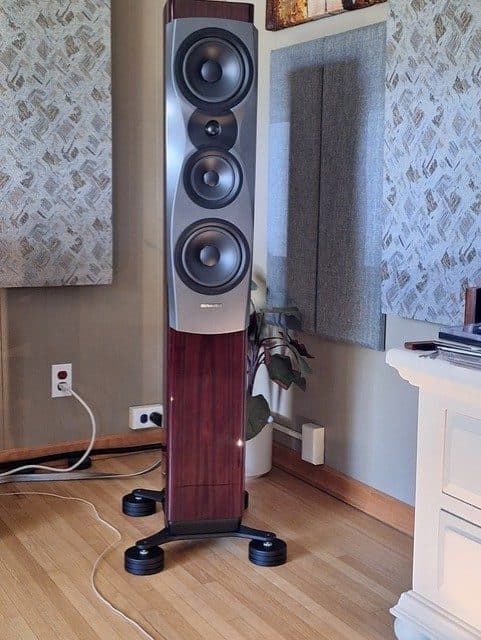
“All I can say is WOW!!!! I don't know where to start. Everything seems to have tightened up. More bass control. The midrange is way more forward and present. The spacial separation is insane.”
“Definitely provides a tighter and more coherent bass response.”
“I am completely blown away by the performance of my speakers with these fitted.”
Used with: Raidho D1 speakers
“Different presentation than the Townshend podiums. I love the punch and speed. Quite amazing.”
Used with: DeVore O/Baby speakers
“transform my formerly excellent speakers into something phenomenal”
Used with: Meridian DSP9 speakers
“What the Auvas added was even a more relaxed natural sound and more separation of subtle detail.”
Used with: Thiel 3.7 speakers
“The soundstage has also become more "holographic/3D", especially in the layers of front to back of the soundstage. Musicians now seem more spaced out in the soundstage.”
Used with: The Kiss speakers
“Better defined and deeper bass. More open sound stage. Greater clarity and details.”
“The adaptive woofer modules together with Auvas is as close as you can get to a proper soffit mounted speaker setup!”
“First set is fully burned in, sounds wonderful”
“the bottom end was so much improved, and the soundstage got so deep and three dimensional, day and night difference.”
“There is incredibly better control of all frequencies, and the soundstage has much more solidity.”
Used with: PS Audio Aspen FR30 speakers
“The Fact 12 sound amazing with the AUVA isolators”
Used with: PMC Fact 12 Signature speakers
“The bass is tighter with more body, both male and female voices are more nuanced and prominent and instruments better separated.”
“the 100's have helped take my Sabrina X's to a new level of detail and realism across the audio spectrum.”
Used with: Wilson Audio Sabrina X speakers
“when I put the auva 100s on spikes the difference was amazing”
Used with: KEF LS60 Wireless speakers
“The 100s are just fantastic with the ATC SCM40A!”
Used with: ATC SCM40A speakers
“they are amazing and deliver much, much more enjoyment than they should for the price”
Used with: ATC SCM100ASLT speakers
“I am very pleased with the isolaters”
Used with: Wilson Sasha speakers
“The AUVA100's are absolutely incredible! I had a good listening session today and even though I had heard them in my system earlier, they surprised me by revealing unheard details in very well known music.”
Used with: Audiovector R3 Arreté speakers
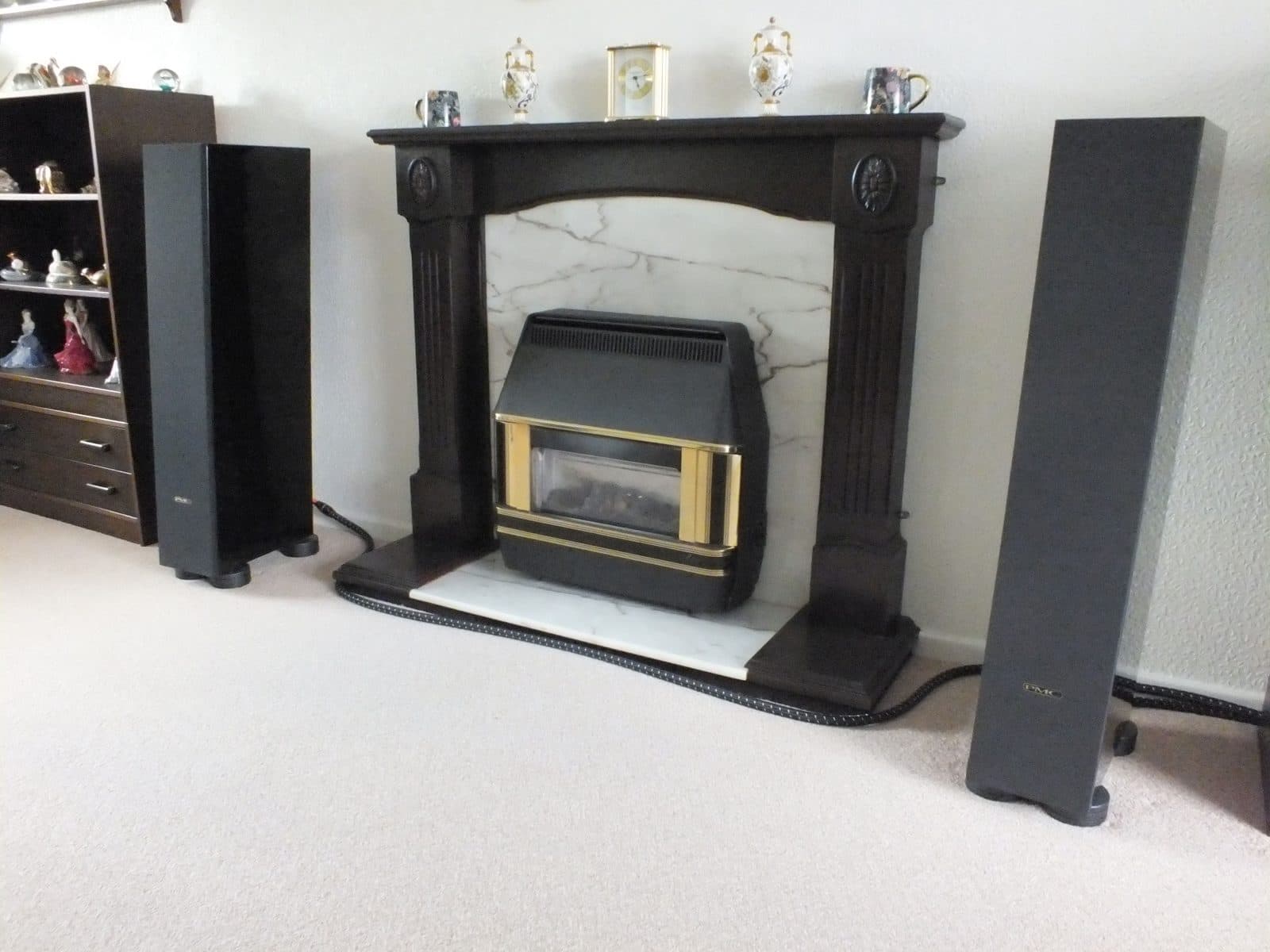
“human voices which now have so much more expression and timbre!”
Used with: PMC speakers
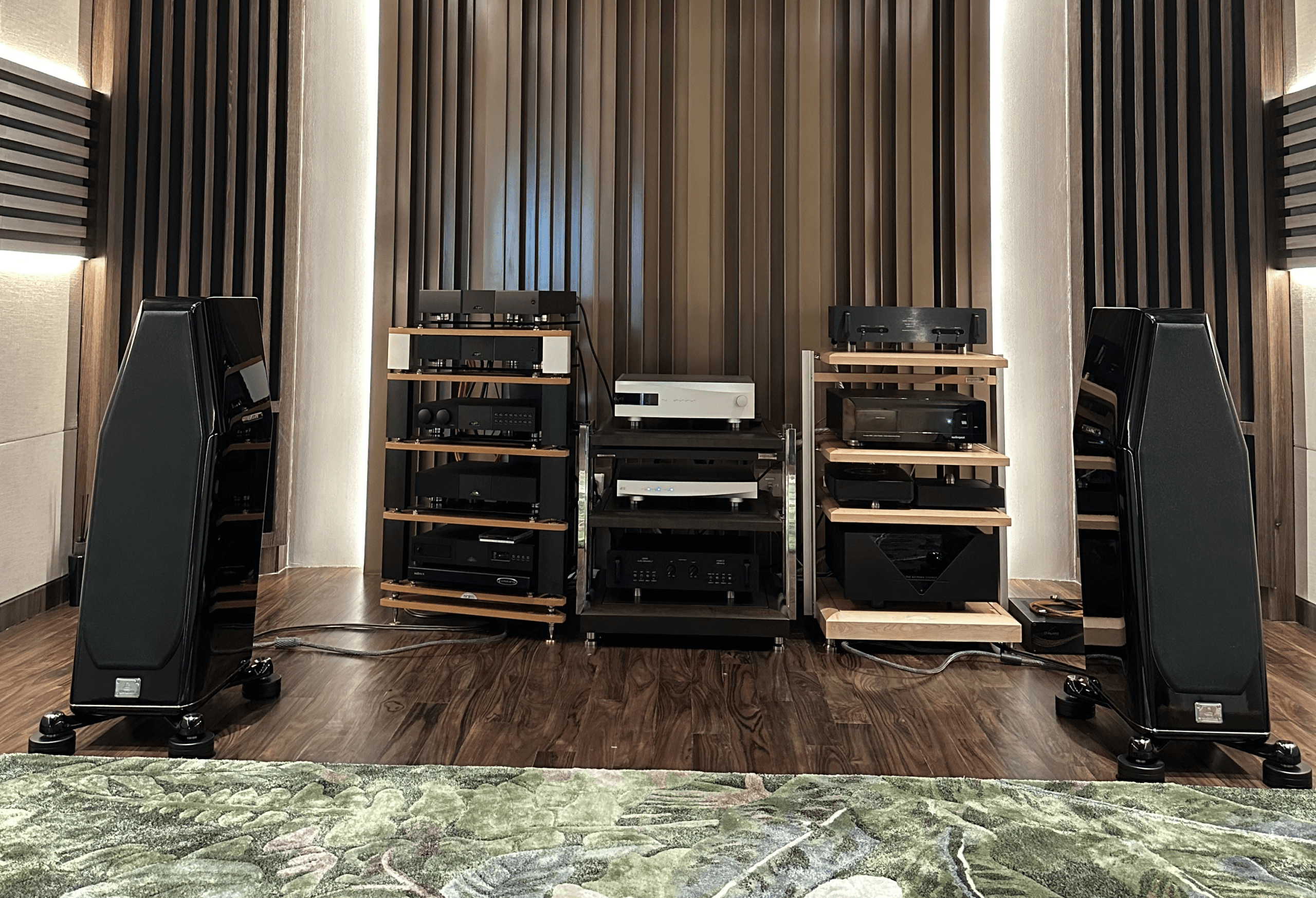
“I am using a full rack of Finite Elemente for my Lamm preamp and Gryphon Essence power amp, driving Kharma DB9s speakers, now with the AUVA 100 replacing the previous shoe of IsoAcoustics GAIA. First impression is bass punch is tighter and faster. The already wide soundstage is wider, and music is more three-dimensional, with every instrument clearly more audible.”
Used with: Kharma DB9 speakers
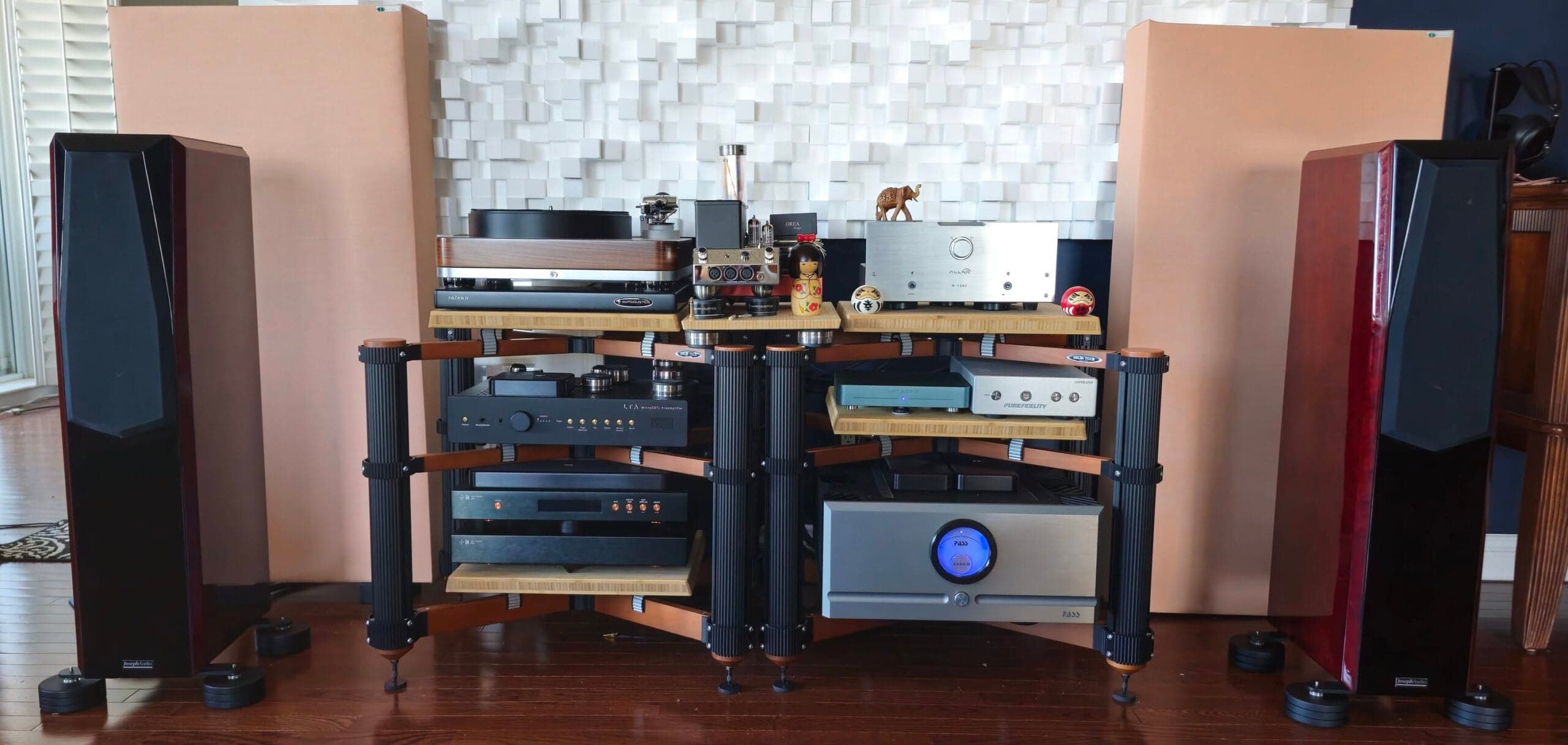
“I’ve installed the Auva 100s and EQs, and they are truly outstanding products. They’ve elevated the sound, which was already excellent, to an entirely new level. Products like these prove that what may seem like simple tweaks can, in fact, make a significant difference in hi-fi. I’m really enjoying the much-improved transparency, detail, articulation, and the almost spooky soundstage and imaging.”
Used with: Joseph Audio Perspective 2 speakers
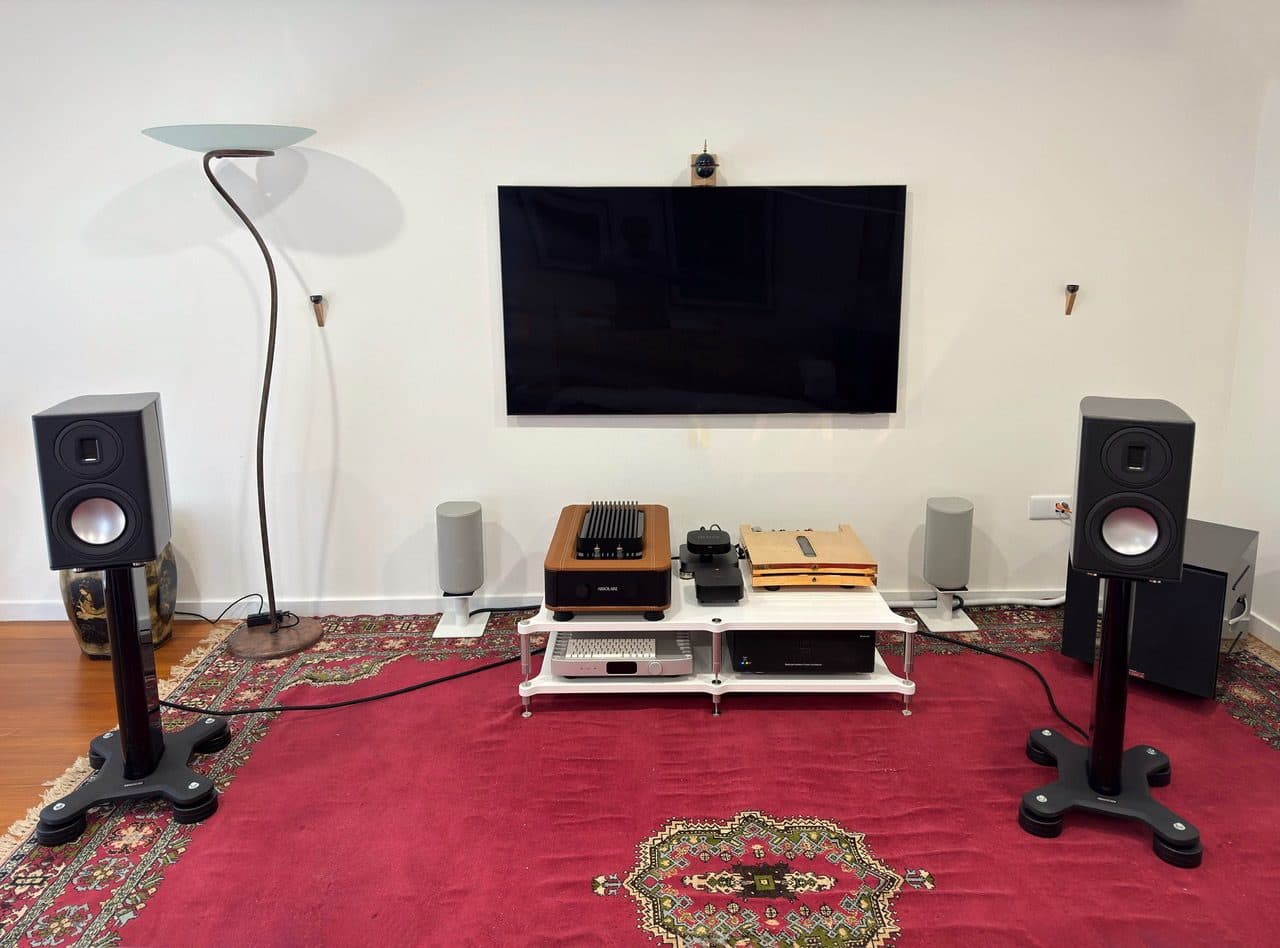
“only when we remove the Stack Audio from the system we really realize how good they are”
Used with: Monitor Audio PL100 II speakers
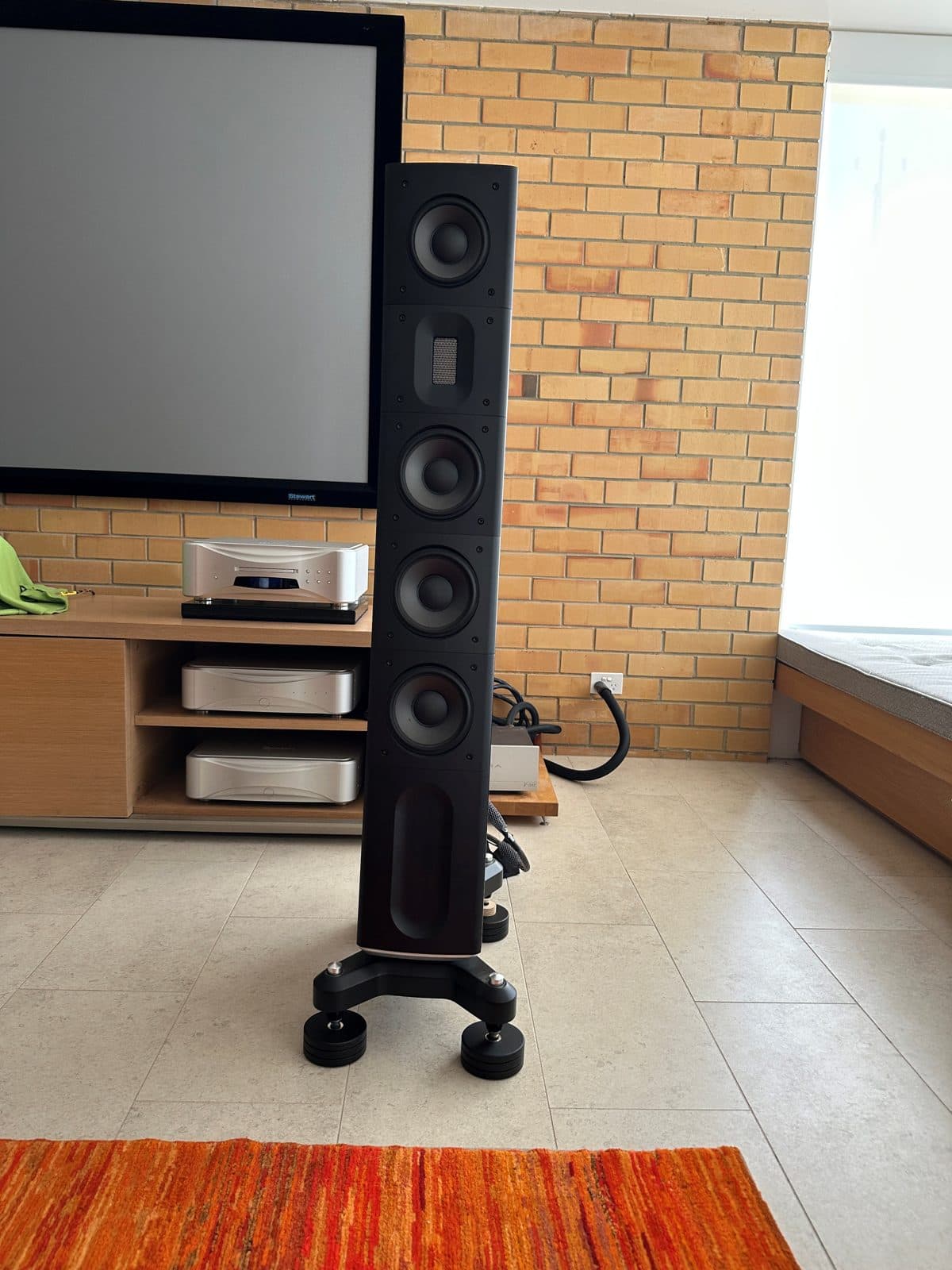
“I have noticed a reduction in the bloom in the mid bass frequencies, which is an annoying characteristic of these speakers, and greater focus in the mid-range and upper frequencies.”
Used with: Raidho D301 speakers
“Certainly the bass seems to have more depth and control (to quite a surprising extent), while I'm also hearing a bigger soundstage and more fine detail (reverb, decay) etc. than before.”
Used with: ProAc ACT One speakers
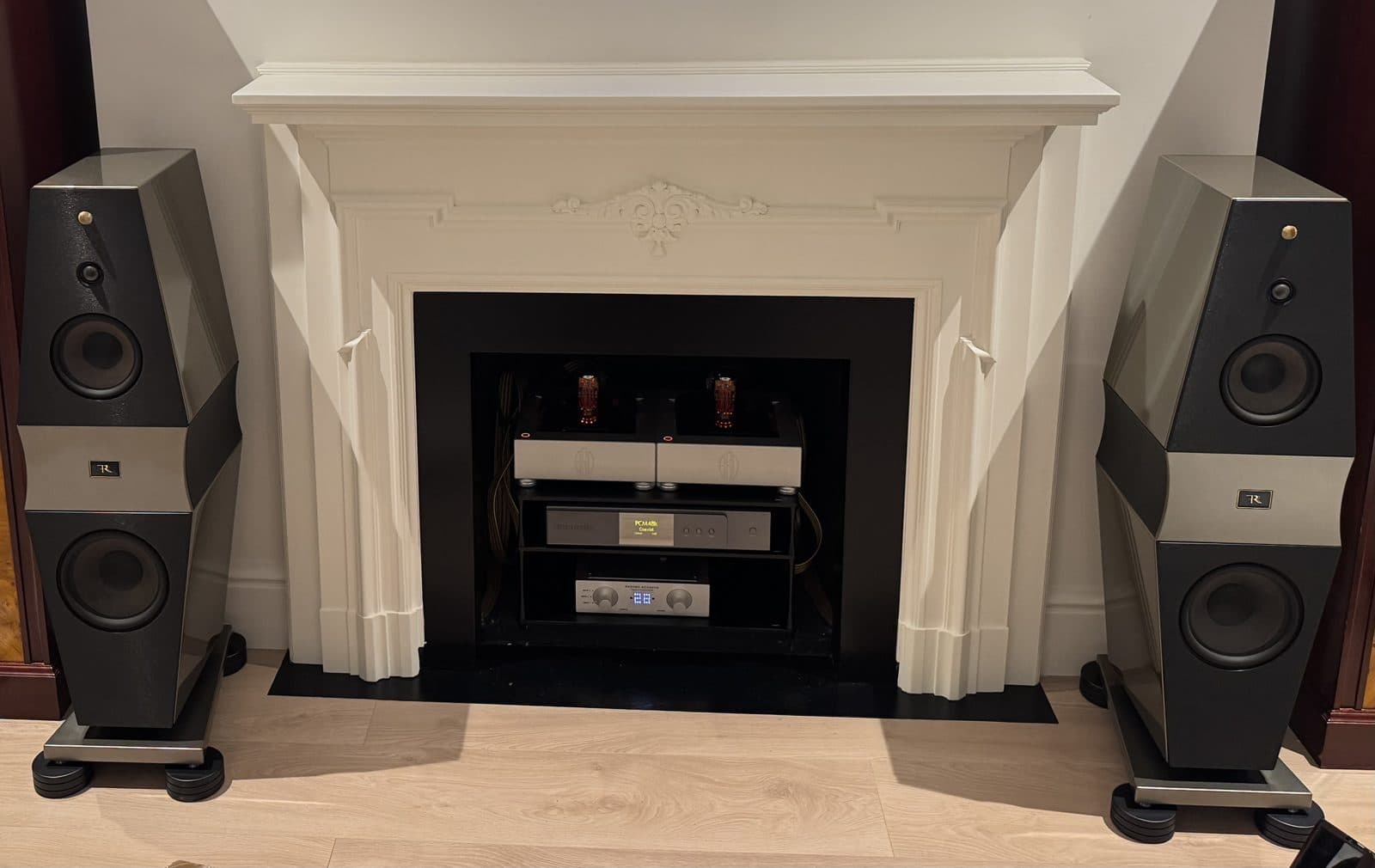
“As soon as I installed the 100 I noticed a huge improvement. Bass is now tighter and more controlled and as a bonus I could hear everything more spatially open.”
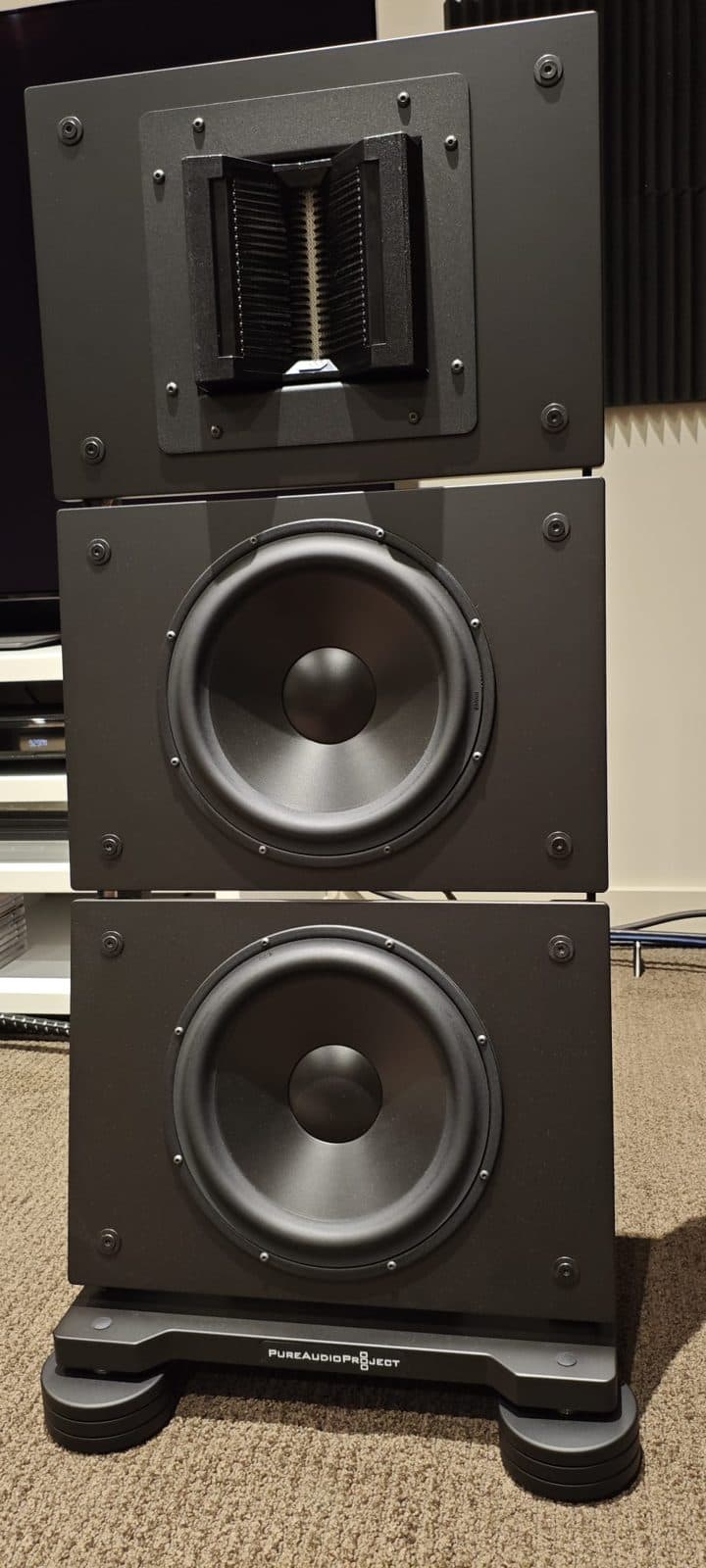
“The 100s cleaned up the bass further and provided more definition and clarity, it's amazing how much more detail is in the bass now!”
Used with: PureAudioProject Trio AMT speakers
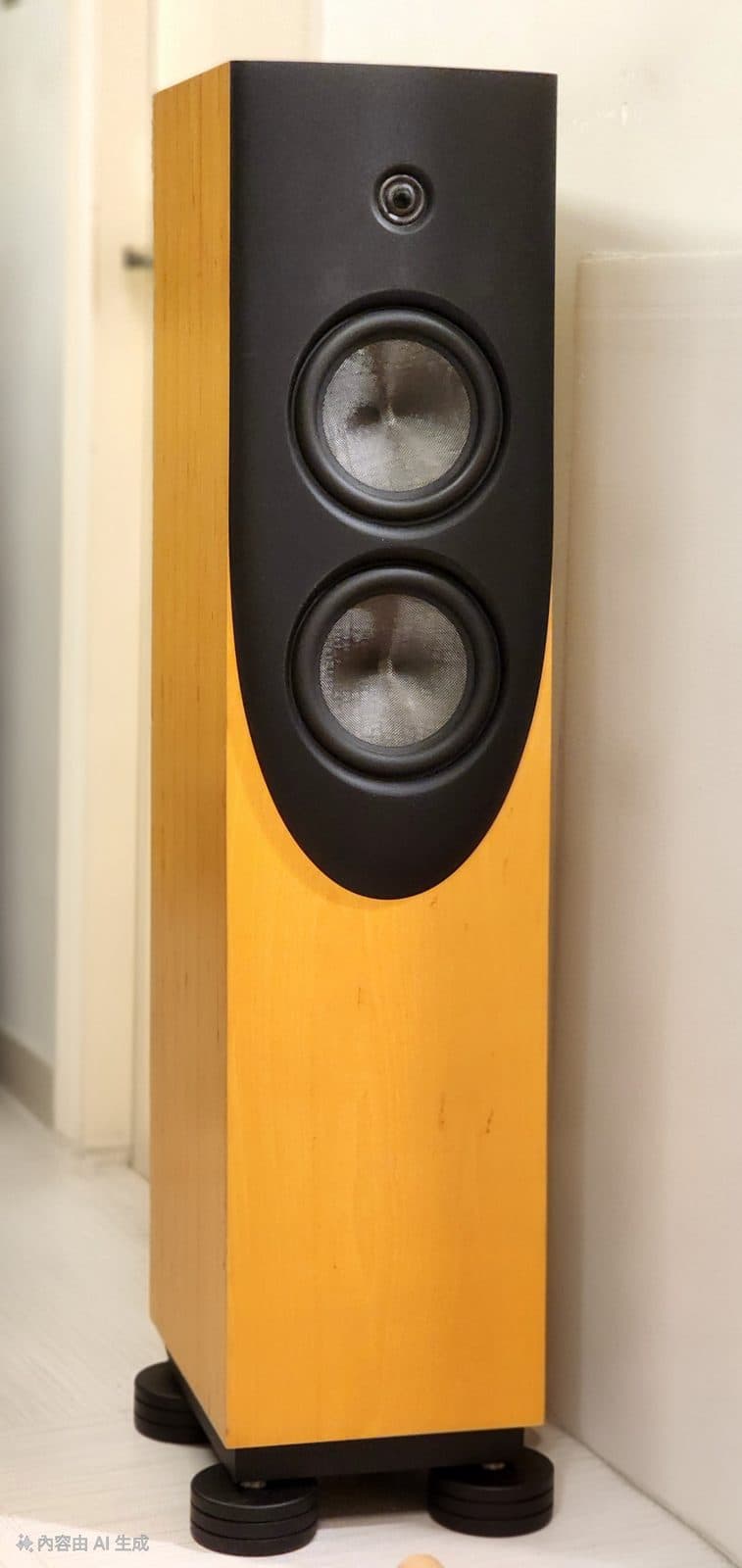
“It make the V2 sound a lot better along with a lot wider and deeper sound stage.”
Used with: Magico V2 speakers
“Fantastic product and value. Before upgrading components, DACs, or whatever, get your setup right first (speaker position and listening chair) with digital room correction and/or treatments, and then address the excessive vibrations to-and-from the speakers with the Stack Audio feet. WOW! The AUVA 100 feet provide sonic improvements that I never thought possible. For my listening experience, the Stack Audio products are worth their weight in gold! Everything reviewers are reporting is true. Bass sounds tighter and deeper, midrange and highs are extended, the noise floor is lower, and the music flows organically with an immediacy and punch that truly was unexpected. One could spend tens of thousands of dollars chasing sonic bliss and not come close to realizing the benefits of the AUVA 100 feet. Take your system to a new level and experience Stack Audio now.”
“Didn’t think I was going to hear much of a difference but I was WRONG. The stereo image clicked into place, but now I could hear that I needed STACK for my equipment. I now have my main components using Stack audio and am very impressed how transparent my system now sounds.”
“These feet really made a tangible difference with a more defined base and midrange. To be honest, I had not expected the improvement to be so big, so I was positively surprised.”
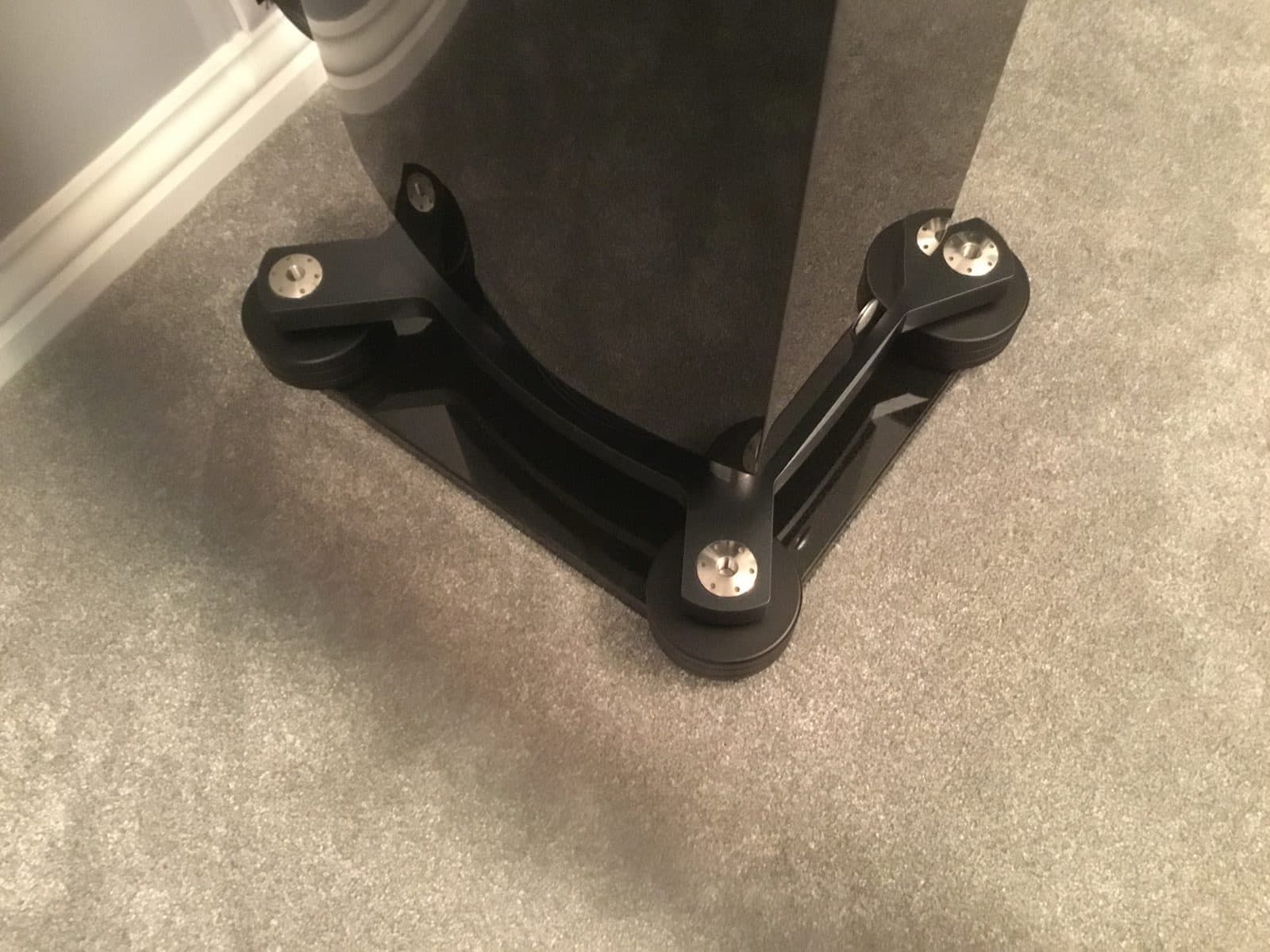
“the bass is the biggest beneficiary, with it being far tighter than ever before. There is also a much more open sound across the mids and highs.”
Used with: Linn speakers
“It's an ear opening experience”
“The product is super well packaged and it looks stunning. You can tell there has been a lot of effort to manufacturing their products. When it comes to sound, I heard an incredible boost in performance, specifically with bass. My room is not the best and the 100’s were able to control the lower frequencies . Totally reccommended”
“What an unbelivable step forward. Thanks Stack Audio for this fantastic product. Worked perfect with my speaker stands.”
“Open, detailed, homogeneous, controlled, balanced”
“A really excellent product that made my speakers sound notably better. Backed up by excellent customer service and support.”
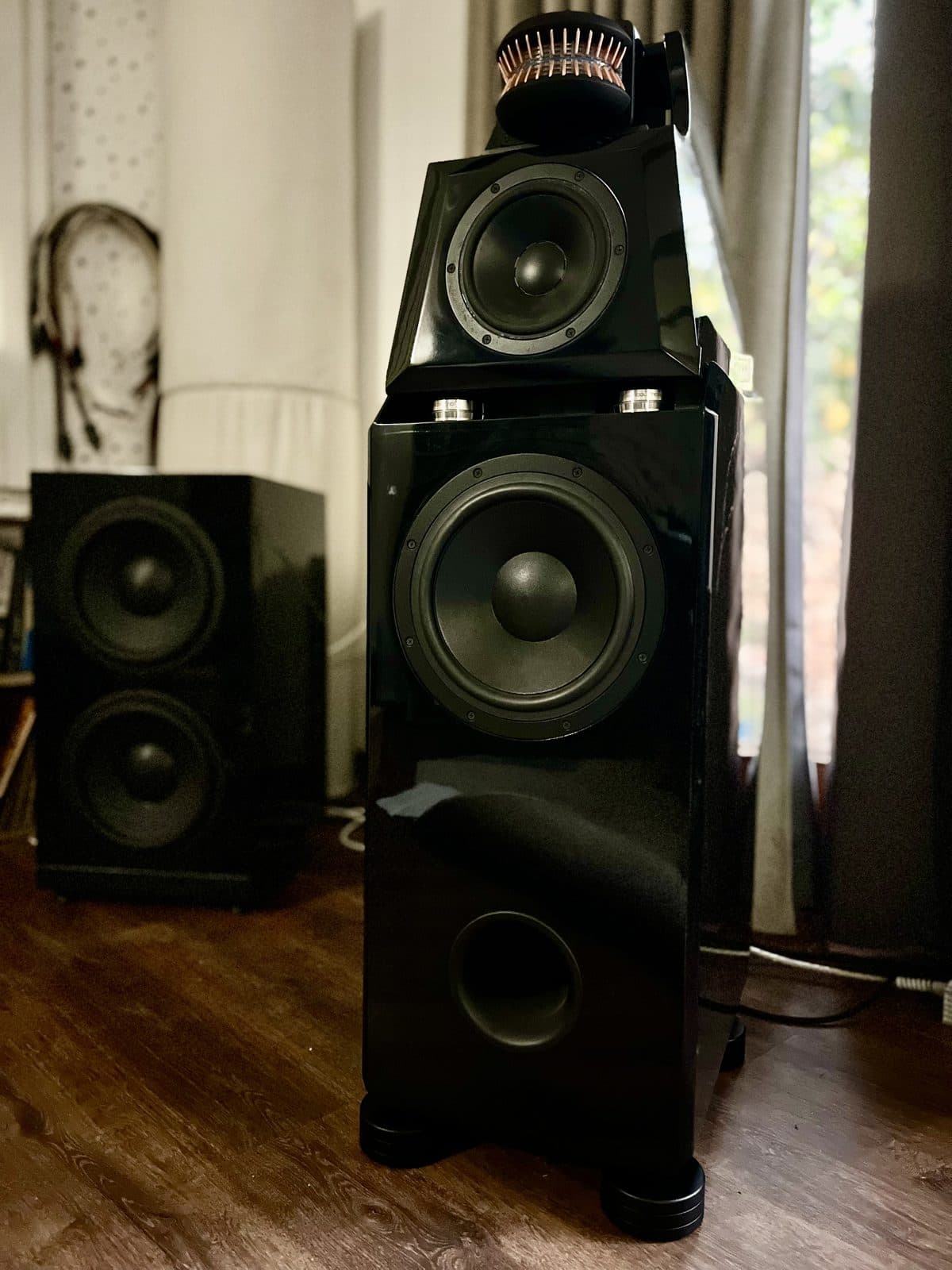
“my perception would highlight two aspects: better "clarity" and more "spatiality" or "three-dimensionality".”
"I am very happy with the isolators. They are very nicely manufactured & finished. The felt pads/rings seem to entirely sufficient to protect my floor, allow the speakers to be easily manipulated into position and give the speakers adequate support & isolation.
As for the sound - the difference is immediately apparent. Rise & decay time of notes are much faster, everything is cleaner or clearer. Vocals seem to have an added degree of intelligibility. Bass notes are cleaner, tighter too.
I am currently listening to Bob Marley Exodus (the album) I decided to listen to this for bass quality but what has surprised me is the quality of the highs. The intelligibility of cymbals & highs of all kinds far surpasses anything I remember hearing on this album before.
One of the first impressions I got, along with the speed of rise & decay times, was that the music had lost a certain relaxed quality and gained a certain brightness or stridency, not enough to make it fatiguing but there nevertheless. Day two, and that impression has dissipated. I still have the added clarity but the impression of stridency has gone. It is not hard to make Leonard Cohen sound relaxed but nevertheless he sounds as relaxed as ever.
Ry Cooder’s paradise & lunch, played for Ry’s gorgeous guitar is now impressing me with the quality of the bass, much tighter & cleaner than I remember. The guitar sound is just pristine.
I have attached a photo of my little system. The diffusers behind the speakers are a recent addition, only a couple of months. What was there before it was a bit home made & made the sound a bit over damped.
With nothing behind, the sound, with anything but the simplest music, would be hopelessly confused.
I now get a proper wide, deep & high soundstage, within which, the isolators have added clarity.
Anyway, don’t want to go on too much, I’m very happy with the AUVA100."
”
"I am actually a fan of source first, but had to invest in sound treatment because the room produced too many standing waves. After installing the panels, I experienced an increase in spatiality in all dimensions and much more transparency, I had expected that, although not to the same extend. What was surprising was the increase in dynamics. I was totally happy with my sound.
In this situation, I ordered the AUVAs for my proAc D48R's. I wanted to know if spikes could possibly be surprassed. The concept sounded promising. This time, too, my expecations were exceeded. At a much lower price than my panels, the AUVAs had a comparable effect! More three-dimensionality, transparency and dynamics! No more vibrations from loose spikes and those dynamic tight basses! My dynamic Naim components now run on steroids! Addictive! Highly recommended."
"So, to be honest on first impressions, I like the improvement but did wonder if it was enough given the cost, and would even say I may have considered a return to the Gaia's. I also had to take into consideration that I'd had to alter the speaker position slightly as AUVA 100's are much bigger than the Gaia's, but overall I like them but wasn't overly 'wowed' by them.
But, as in all things, time tells and as I had the chance to spend more time listening, then things seemed to gradually improve, building on the overall first 'OK/Good' impressions I had. So my current thoughts are, that the AUVAs really add a sense of space & depth (darker background) for the music to flow from. There is greater dimension overall and the tonal presentation is more refined.
I've also been able to hear more of a difference on a IC cable change I threw in for good measure."
Used with: Audio Note AN-E SPe HE Signature speakers
"Over the past two years, I have owned a variety of isolation/coupling devices to include Stillpoints, Symposium Rollerblocks, IsoAcoustics component and Gaia speaker Isolation devices. They all made some positive improvements but they all lacked the speed and initial attack of notes and a sharper image focus that Audio Points Coupling discs and Speaker System provided.
I was quite happy with my AP until I heard about Stack Audio. The moment I replaced my AP with coupling discs to the AUVA EQ, I heard way more low-level detail, texture, more expansive soundstage width/depth and image focus was much tighter with a more impactful midbass and bass presence. Each AUVA EQ added to my DAC and Tube Pre-Amp increased my listening pleasure quite notably..
I also added the AUVA 100 Speaker Isolators a few days ago and to my surprise, they have similar attributes as the EQ; tighter/cleaner midbass/bass, more transparency, ambiance/spatial detail and a laser focused image that you can follow precisely within the soundstage.
These AUVA EQ and Speaker Isolators are the real deal and they are staying where they belong, in my system..."
Used with: Liberty Audio XVOX speakers
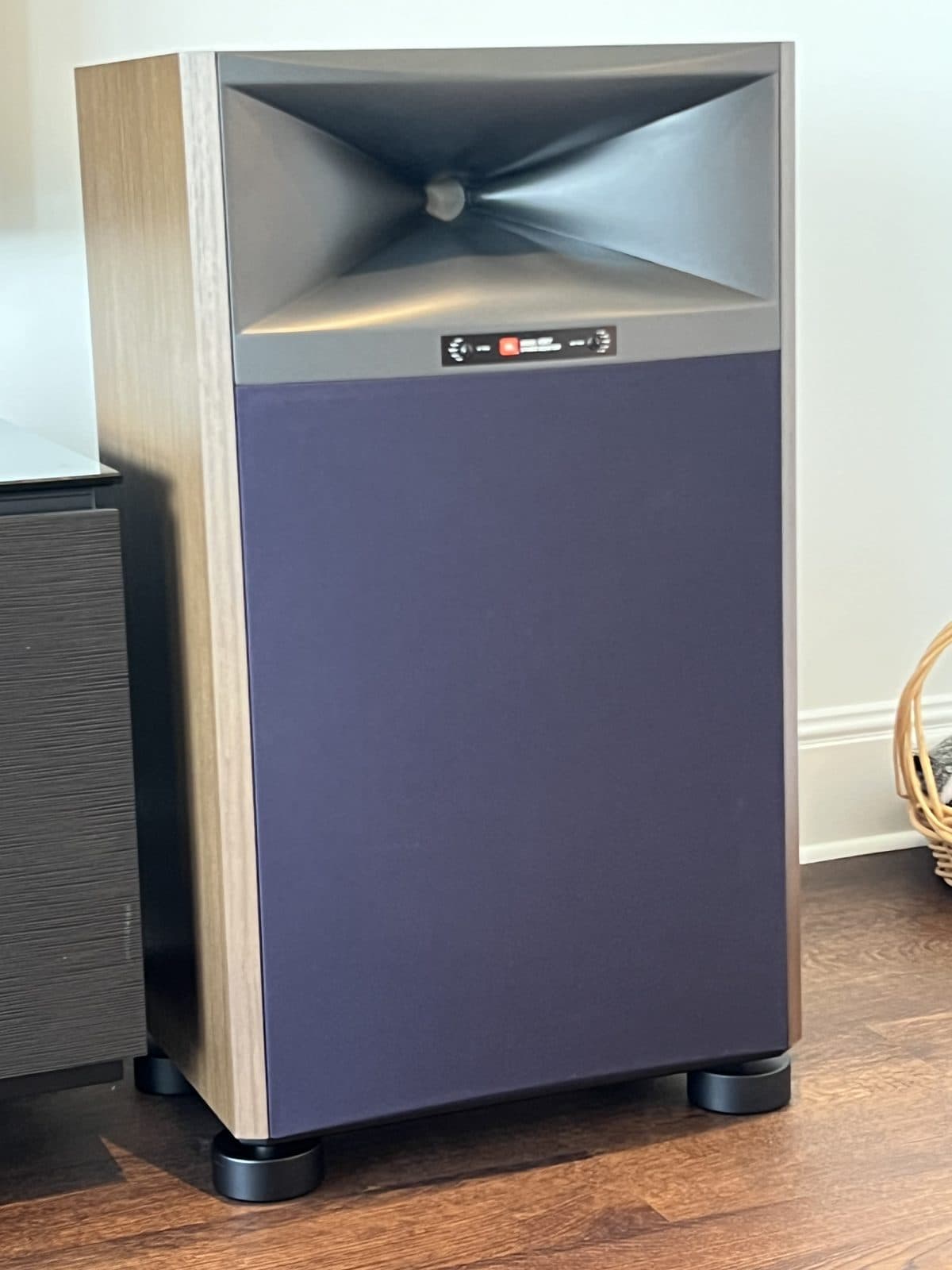
“The combination now sounds absolutely spectacular with top to bottom significant clarity and soundstage improvements”
Used with: JBL speakers
"It's hard to envisage what an isolator will generally do to a random system acoustically, but in my case, it was rather simple. So I give you a specific description what actually happened, after acquiring the Auva 100 for my Daniel Hertz M7B speakers. Generally I pick my gear very carefully, so I needed a professional isolator solution for my next step after my system was finished (I thought).
I use ultra-efficient speakers so, I thought isolator could potentially work wonders in my system in the long run. But Mark Levinson told me by having a conversation with him, that I shouldn't expect too much from any isolator under his speakers... in the end my experience said otherwise.
My primitive 1st gen. plan was plain simple: raise the speaker cabinet to a small amount, so my robot vacuum would fit around the edges of the speaker without to scratch my piano black finishing, without losing musicality... okey, check mark.
But I was still curious if their claims about Auva isolator has any benefits, so I listened carefully, and to my big surprise, the overall sound signature gained a deep background from nowhere. I was floored. Probably the resonance-reduction towards floor & back gave the cone vibration the remaining extra movement to enhance the total effectivity of the speakers.
At least that's my interpretation of the outcome. So no energy loss present from the cabinet vs. wood floor interactions anymore.
What else? Soundstage got deeper and the whole presentation gained something magical, the MUSIC CAME TOGETHER finally and I was able to let alone my weird idea to upgrade my amplifier again & again. It is not necessary, my plan is to enhance my current system to maximum potential with small tweaks like this. Of course, I have to admit ML is also right, to reach such changes (or even bigger) it is also possible to change amplification which has speaker-specific fine-tuning.
There are many ways to influence sound in domentic environments.
Highend system building is a fancy game, You either love to do it by finding a way to reproduce your music collection in a satisfactory manner, or you will always seek for something better and you will unable to find your ultimate peace in this hobby.
A hobby should be fun, and I found my end destination with my system, and Auva 100 helped me to calm down, sit back, and forget about upgrades. My system has been completed, this isolator was the missing piece. I'm there... no major issue found for my ambitious audible taste anymore.
Please keep in mind, that I possess absolute hearing: 18K Hz not a problem for me... Stack Audio, thank You guys. Your flexibility & kindness towards customers is unmatched in my humble opinion."
Used with: Daniel Hertz M7B speakers
"The AUVAs make quite a difference to the sound of the Sibelius. There is more air and decay with slight loss to the density of the sound. Bass is cleaner and textured. Vocals become very clear as everything suddenly snaps into focus. The Paul Rigby review described it well.
With the Townshend podiums it's a more relaxed presentation with more body but lacked the extra focus, air and decay making it a bit laid back. There is more bass but slightly less clean. Soundstage is big but instrument separation is not as distinct as the AUVAs."
"Despite the exceptional reviews, I must admit I had limited expectations given I was already using IsoAccoustics Gaia, and I suspected I was already getting a large percentage of the improvement speaker isolation could bring. I originally set them up on my carpeted floor with the supplied spikes, the installation was simple and trouble free. On listening to them, whilst I heard an improvement, I thought my limited expectations were justified, the improvements were marginal. HOWEVER!! I noticed that as I was about to leave my listening room, I touched one of the speakers and it moved a little. On closer inspection it appeared that the spikes were not long enough to go through both my carpet and my underlay, and as such they were not in solid contact with the concrete floor and free to sway in all directions. Given your main USP is this product's ability to hold a speaker rigidly whilst at the same tine filtering out vibrations, I did think that this may well be compromising their performance. So I reintroduced a spiked set of granite speaker stands and then mounted the Auva’s directly on to them, with their spikes still on The speaker was now rigidly in place.
Then I listened for a second time. Wow! Absolutley stunning difference, it took of all of 30 seconds to notice. Soundstage bigger in all directions, huge improvement in depth perception, bass appears to dig deeper, has more impact but at the same time seems to exhibit more control. The difference it made to the vocals is perhaps the most significant, yet hard to articulate accurately. Yes there is more detail, more precision, you can make out slight changes in voice inflection that went previously unheard, but it is something more than that, voices sound fuller, more 3 dimensional, more convincing. All cliches I know, but I am not sure how else to explain the changes.
As you can tell I am very impressed, thank you for a great product! "
"I am very happy with the AUVAs. The enhancement to soundstage detail and dimensionality is amazing. I am using them on Wolf Von Langa SON speakers which employ field coil drivers. They are already incredibly transparent but the AUVAs take it to the next level."
Speakers: Wolf Von Langa SON”
Used with: Wolf von Langa SON speakers
“Firstly, the packaging was excellent, well designed, looked expensive and kept the product safe
Although I was concerned as to whether your standard bolts would be too short and you kindly supplied some some sets of longer bolts, in the end they were not needed. The amount of adjustment was more than adequate.
Compared to the previous isolators, the IsoAcoustics Gaia's, the AUVA's looked more in scale with my Fact 12 signatures, and the overall appearance was more premium, which should be expected as twice the price!
With the AUVA's in place, the speakers felt more secure and with the felt pads in place it was much easier to move them around on my hard floor to get the best sound.
The key question is did they improve the sound?
Very pleased to say that the soundstage improved, wider and easier to pick out individual instruments. The bass was more focussed and tuneful.
With speakers in this price range I would recommend that potential buyers should give them a try.
Speakers: PMC Fact 12”
Used with: PMC Fact 12 Signature speakers
“So finally this was the weekend to get it done and compare the AUVA's to the ISO ACOUSTIC GAIA 2. Well the first thing I noticed right off the bat was how tighter the bass consistency sounded and the music in general had more of a 3D present about it. The sound stage just sounded more crisper, clearer and more pronounced. It was those two elements specifically that I thought out performed the GAIA'S. Plus I thought the music had a better sense of timing and rhythm to it. There DEFINITELY an improvement over the GAIA's for sure. Theo thanks for creating such a great product!
Speakers: ATC SCM40A”
Used with: ATC SCM40A speakers
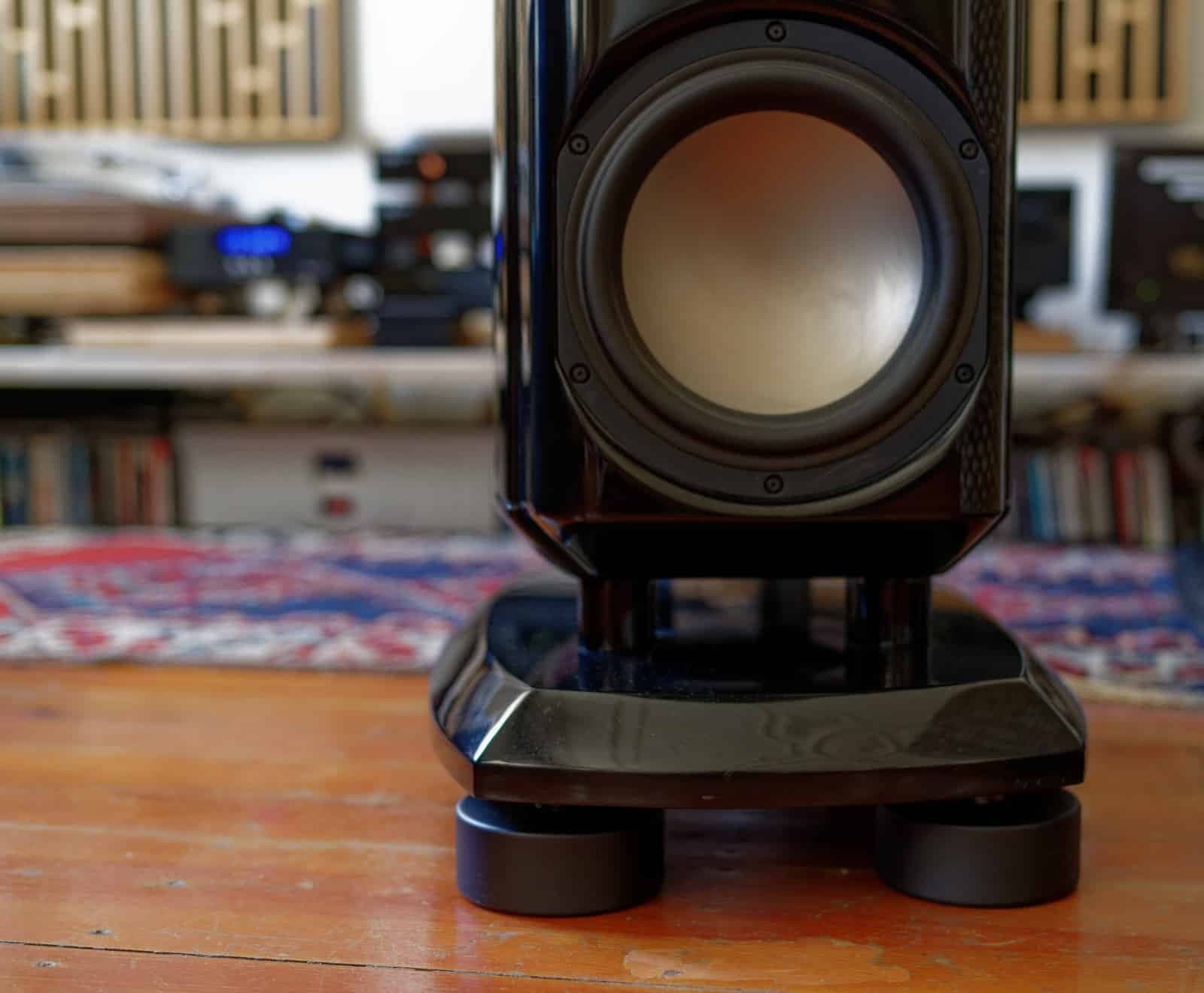
"I had my Revel Ultima Salon 2 with the Gaia1 and have now switched to the Stack Audio Auva's 100 and... I am really pleased, much better stage/image and the information clearer and more detailed, more natural sound."
Speakers: Revel Ultima Salon 2”
Used with: Revel Ultima Salon 2 speakers
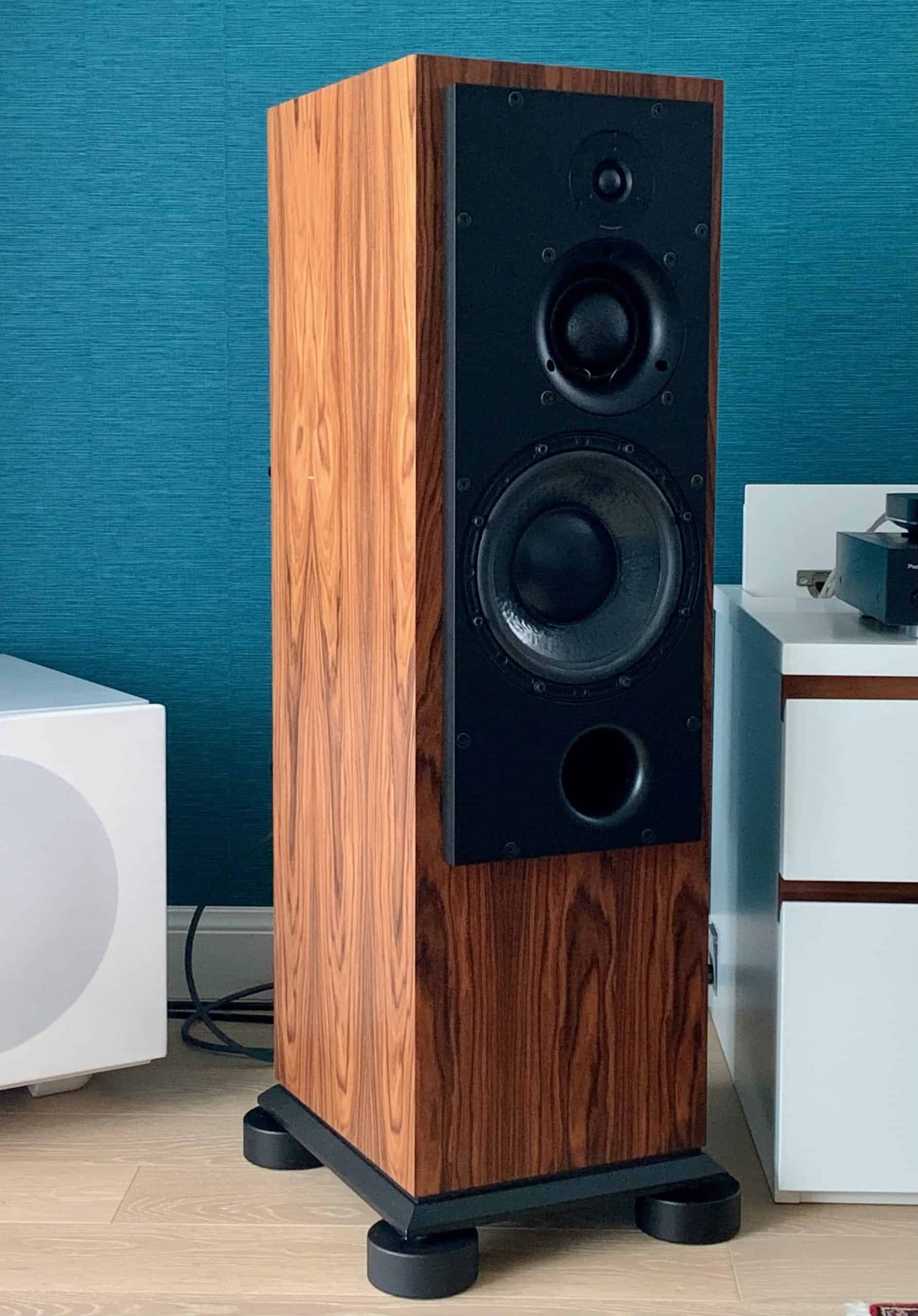
“I received the AUVA 100, unpacked and installed them. Already from the first listening session I immediately experienced the difference between speakers with or without AUVA. What shall I say? Just Wow, it’s amazing! Really impressing. You will find a picture in attach. If you need you can use it. Thank you for your support. "
Speakers: ATC SCM 50 ASLT.”
Used with: ATC SCM 50 ASLT speakers
"The AUVA isolators and I had the first listening session together with my wife. What shall I say, I had expected a good performance but not at this degree! Yesterday we were listening to four tracks which we know very well. Today, with the new equipment we were fascinated after the first few seconds of the first track (last movement of Franz Schubert’s octet for clarinet, bassoon, horn and strings in F major D. 803 with Gidon Kremer and friends). As you know my speakers are very good, but in the past we never heard this music as detailed and exactly located in a well defined space.Same experience with Dvorak’s 8th symphony, first movement (London Symphony Orchestra with István Kertesz 96kHz/24bit) and Gustav Mahler’s 5th symphony in a 192/24 recording (Duisburg Phil. , Jonathan Darlington): here the complex parts, often in fortissimo, got transparent as never before heard. Also the specific colours of the woodwinds were better than before. Last track was John Adams’ Short Ride in a Fast Machine with San Francisco SO and Michael Tilson Thomas (96/24), which became a “firework”! We thank you very much for having solved the problem of dampening the speakers whilst giving them enough stability. We are really enthusiastic with the AUVAs and we are sure that we will have much enjoyment with them in the future!" Speakers used with the AUVAs: Piego Coax 511.”
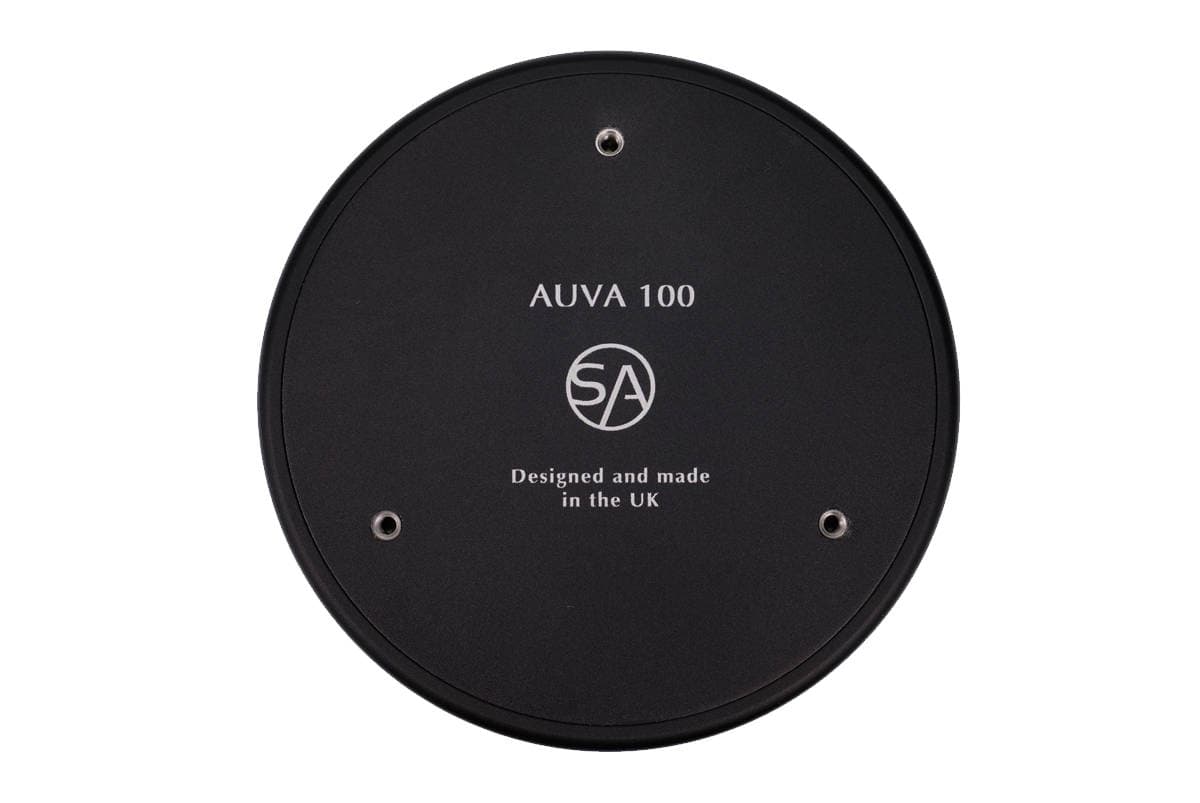
“The AUVA Isolators are not designed artwork but they sure as hell work! My impression….. The hunt is over! I’m now satisfied that my system is performing as intended. The enhanced clarity allows for higher volume listening levels and increased listening experience. Thank you.”
Speakers used: PS Audio FR 30.”
Used with: PS Audio FR30 speakers
“The set up was simple and the new sound spectacular. I have looked for this product for 40 years and never found anything I liked. You have come up with a great product that will work well with any system. Congratulations. Hope to stay in touch. The Avalons are great speakers, but the isolators take them to another level.”
Speakers used: Avalon Time (Legacy)”
Used with: Avalon speakers